

Project Nomad
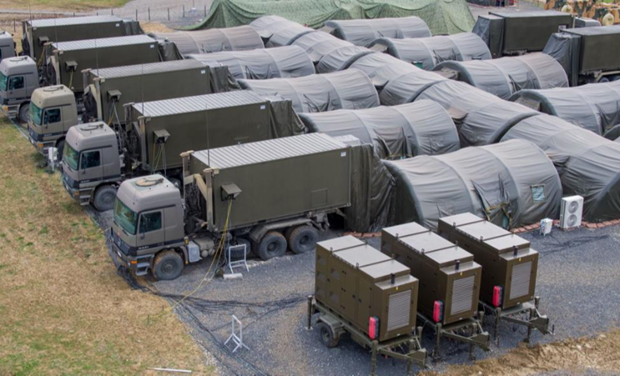
Project NOMAD (NOvel energy storage technologies usable at MilitAry Deployments in forward operating bases). NOMAD project will comprehend both components and system integration analysis, using the results and requirements to define a guideline recommendation for the energy storage systems and their integration.
About the programme
The overall goal of the SMART-LIVING programme is to develop, through interdisciplinary cooperation between research organisations and industry partners, technologies and products for creating zero-emission, sustainable, zero-energy, modular and adaptable buildings of the future.
Particular emphasis will be placed on solutions that contribute to the well-being, health, safety and protection of users. The prototypes developed will be integrated into a full-scale demonstration building module, enabling them to be tested and evaluated in a real environment.
Research, prototype development and demonstration
The programme is designed as an integrated whole of eight research and development projects.
The foundation of the programme is the research and development of technologies at technology readiness level TRL 3–4:
- RRp 1: Advanced biomaterials for construction,
- RRp 2: Building fabric and functionalities,
- RRp 3: Energy in buildings,
- RRp 4: Research into new artificial intelligence functionalities for household appliances.
The results of these projects will be the starting point for developing concrete product and solution prototypes at TRL 5–6:
- RRp 5: Product prototypes for the building fabric,
- RRp 6: Energy solution prototypes.
The prototypes developed will then be presented and validated in a real environment:
- RRp 7: Demonstrators of a smart, circular and health-friendly home,
- RRp 8: Demonstration and evaluation of all prototypes, including a transdisciplinary approach and life-cycle analysis.
Expected results
The main results of the programme will be prototypes that form the basis for developing final products and their subsequent mass production. During development, product properties will be assessed in advance, potential production challenges identified and end-of-life options for the products examined.
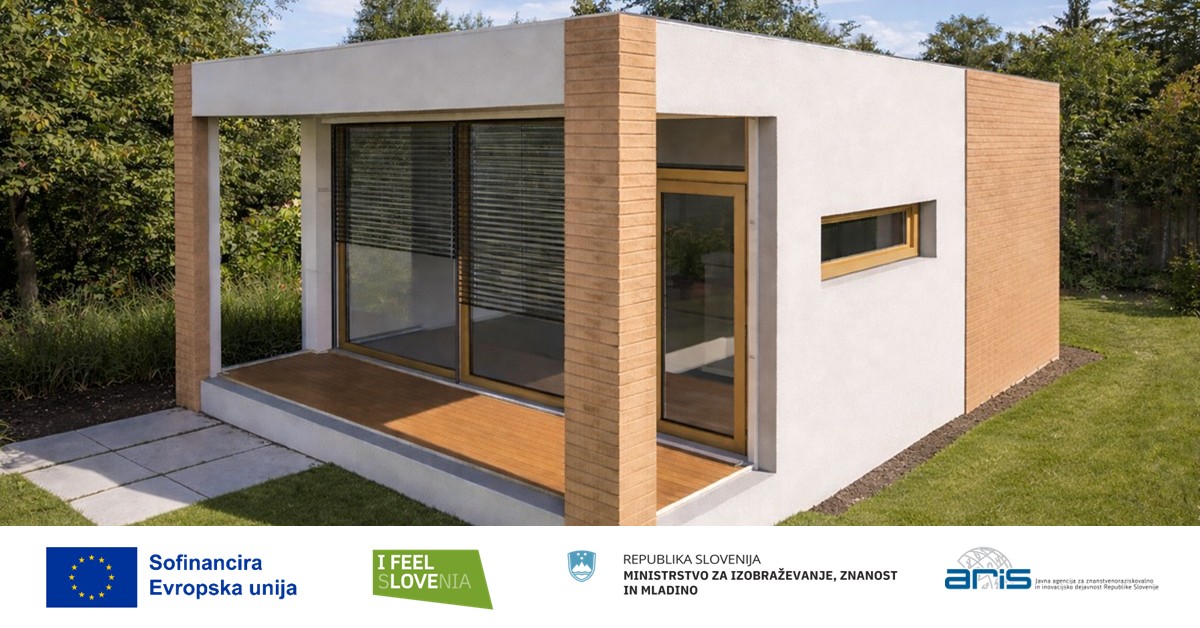
The demonstration building will be set up at the test site of industrial partner REM d.o.o. in Trebnje. It will bring together and showcase, in one place, the solutions developed for smart, sustainable, circular and health-friendly living.
Programme consortium
The programme is led by the University of Ljubljana, Biotechnical Faculty, and the consortium includes:
- University of Ljubljana, Biotechnical Faculty,
- University of Ljubljana, Faculty of Mechanical Engineering,
- University of Ljubljana, Faculty of Electrical Engineering,
- University of Maribor, Faculty of Electrical Engineering and Computer Science,
- Slovenian National Building and Civil Engineering Institute (ZAG),
- GORENJE, gospodinjski aparati, d.o.o.,
- REM montaža in kleparstvo d.o.o.,
- DANFOSS TRATA regulacija ogrevanja, prezračevanja in klimatizacije, d.o.o.,
- M SORA, trgovina in proizvodnja, d.d.,
- SMARTIS, informacijski sistemi d.o.o.,
- JUB kemična industrija d.o.o.,
- PIKTRONIK, proizvodnja, storitve in najem d.o.o.
Programme value and funding
The total value of the SMART-LIVING programme is EUR 8,229,230.20. The contribution of the European Regional Development Fund amounts to EUR 4,999,780.68, which represents approximately 60.76 percent of the total programme value.
The programme is co-financed by the European Regional Development Fund under the European Cohesion Policy Programme 2021–2027.
More information on the European cohesion policy is available on the evropskasredstva.si website.